At St Joseph's Primary School, we have based our approach on "The Write Stuff" by Jane Considine to bring clarity to the mechanics of writing. "The Write Stuff" follows a method called "Sentence Stacking" which refers to the fact that sentences are stacked together chronologically and organised to engage children with short, intensive moments of learning that they can then immediately apply to their own writing. An individual lesson is based on a sentence model, broken in to 3 learning chunks. Each learning chunk has three sections:
Children are challenged to ‘Deepen the Moment’ which requires them to independently draw upon previously learnt skills and apply them to their writing during that chunk.
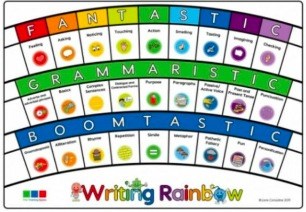
"The Write Stuff" uses three essential components to support children in becoming great writers
The three zones of writing :-
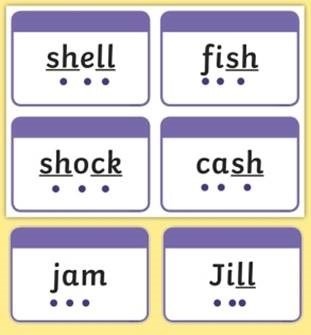
It all begins by making our mark! We encourage the children to make marks in all kinds of different environments: mud, sand, paint and on chalk boards. We then focus on applying our phonics knowledge, thinking about the correct way to form letters. When we are ready to write, we start by hearing and writing the initial sound in words, then move on to writing CVC words and ending the year with the target of writing simple sentences. When writing sentences, it is important that we remember to start with a capital letter, separate our words with finger spaces, put our letters on the line and remember a full stop at the end. When supporting the children to write, we encourage them to write all of the sounds that they can hear and use a sound mat if they can’t remember what the sound looks like when it is written. We also teach ‘tricky words’ which are words that cannot be sounded out.
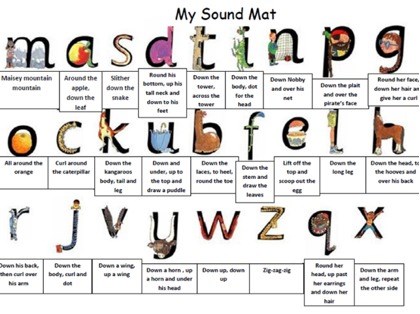
When writing, there are different levels that children achieve:
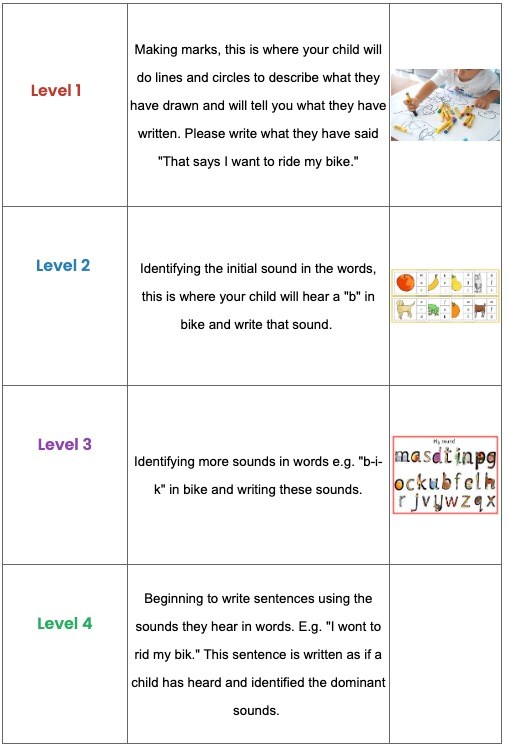
At this stage, please do not worry about spelling. We want your children to write the sounds they can hear.
Spelling is taught through the Spelling Shed scheme. In each year group, children will be taught specific spelling rules which they will build on and use throughout the scheme.
Spelling is taught through a range of strategies including fun activities and games to embed the spelling rules and list taught for that year group. These strategies include Battleships, The Spelling Web, Scrabble, Memory Challenge, Spelling Search and Crosswords.
The 2014 National Curriculum identifies spelling lists that every child in each Key Stage of primary school needs to know by the end of that Key Stage. It is expected that by the end of Key Stage 1 children know the example words for year 1 and 2, as well as including almost all exception words which are used frequently in pupils’ writing. The word lists for Years 3 and 4 and Years 5 and 6 are statutory. These lists include a mixture of those words children use in their writing as well as those that are often misspelt.